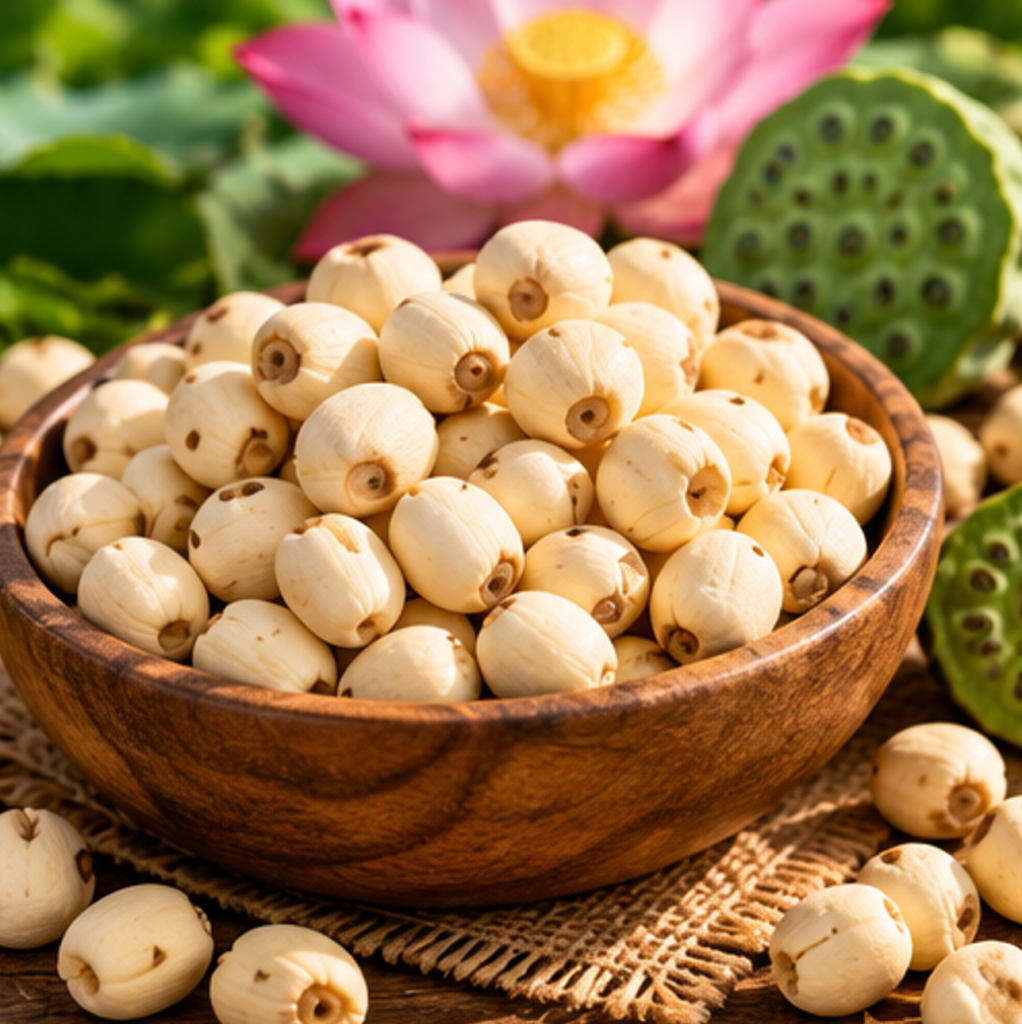
Vietnamese Lotus Seeds are an important agricultural food ingredient used in traditional Asian cuisine, desserts, bakery products, beverages, and a variety of processed food applications.
Harvested from the lotus plant (Nelumbo nucifera), lotus seeds are valued for their mild flavor, firm texture, and versatility in food manufacturing.
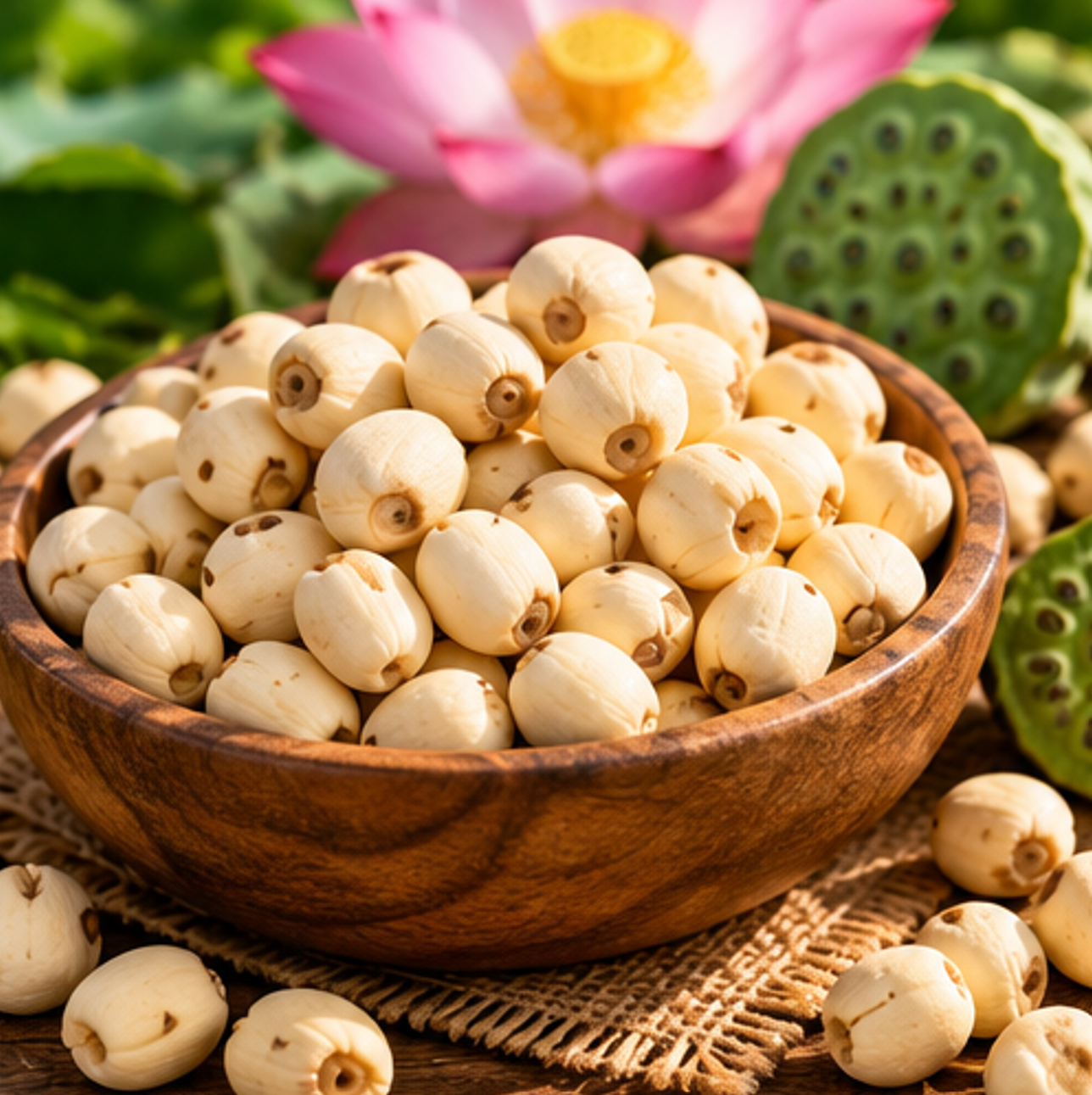
Vietnam has a long tradition of lotus cultivation and consumption. Today, international buyers interested in Vietnam lotus seeds may explore sourcing opportunities for dried, peeled, split, and other processed forms, depending on supplier capabilities and market requirements.
For food manufacturers, ingredient distributors, wholesalers, and importers, purchasing lotus seeds in bulk requires careful consideration of product form, moisture content, appearance, processing methods, microbiological quality, packaging, and export documentation.
Vietnam Spices introduce this guide explains the main commercial types, technical specifications, quality control requirements, and purchasing considerations for international buyers sourcing lotus seeds from Vietnam.
1. What Are Vietnamese Lotus Seeds?
Lotus seeds are the edible seeds of the lotus plant, botanically known as Nelumbo nucifera Gaertn.
The lotus is an aquatic plant widely associated with Asian cultures and cuisines.
Its seeds are used in both traditional food preparations and modern processed food products.
Lotus seeds can be consumed after appropriate preparation and may be processed into different commercial forms.
Common Applications of Lotus Seeds
- Traditional Asian desserts
- Sweet soups and porridge
- Bakery fillings
- Confectionery products
- Beverage ingredients
- Ready-to-eat food products
- Snack manufacturing
- Specialty food retail
- Foodservice distribution
Depending on the application, buyers may require dried whole seeds, peeled seeds, split seeds, or other processed forms.
The appropriate product should be selected according to the manufacturer’s production process and quality requirements.
2. Where Are Lotus Seeds Grown in Vietnam?
Lotus is cultivated in several regions of Vietnam where suitable water and agricultural conditions are available.
Dong Thap Province, particularly areas associated with lotus cultivation in the Mekong Delta, is well known for its lotus-growing tradition.
Lotus cultivation is also found in other parts of Vietnam.

The quality and characteristics of lotus seeds may vary according to:
- Lotus variety
- Growing environment
- Harvest maturity
- Seed size
- Harvesting methods
- Cleaning and sorting
- Peeling and core removal
- Drying methods
- Storage conditions
For international buyers, geographic origin can be useful information, but the final purchasing decision should be based on actual product specifications, representative samples, and supplier verification.
3. Why Are Vietnamese Lotus Seeds Used in International Food Markets?
Mild Flavor and Versatile Texture
Lotus seeds have a relatively mild flavor that makes them suitable for both sweet and savory preparations.
After appropriate cooking, they can develop a soft or tender texture depending on the product and preparation method.
Traditional Asian Food Applications
Lotus seeds are used in traditional Vietnamese and other Asian dishes, including desserts, sweet soups, and confectionery.
This makes them relevant to importers supplying Asian grocery stores, foodservice operators, and specialty food manufacturers.
Multiple Processing Options
Lotus seeds may be supplied in different forms, including whole dried seeds, peeled seeds, and split seeds.
Some applications may also require removal of the green embryo, often called the lotus seed heart or core.
Ingredient Opportunities for Food Manufacturers
Lotus seeds can be incorporated into:
- Bakery fillings
- Dessert preparations
- Snack products
- Sweetened food products
- Ready-to-cook mixes
- Specialty plant-based food formulations
Suitability depends on processing, formulation, food safety, and product-specific requirements.
4. Main Types and Grades of Vietnamese Lotus Seeds
Commercial lotus seed grades may differ among suppliers.
Rather than relying only on general labels such as Grade A or Premium Grade, buyers should define measurable purchasing specifications.
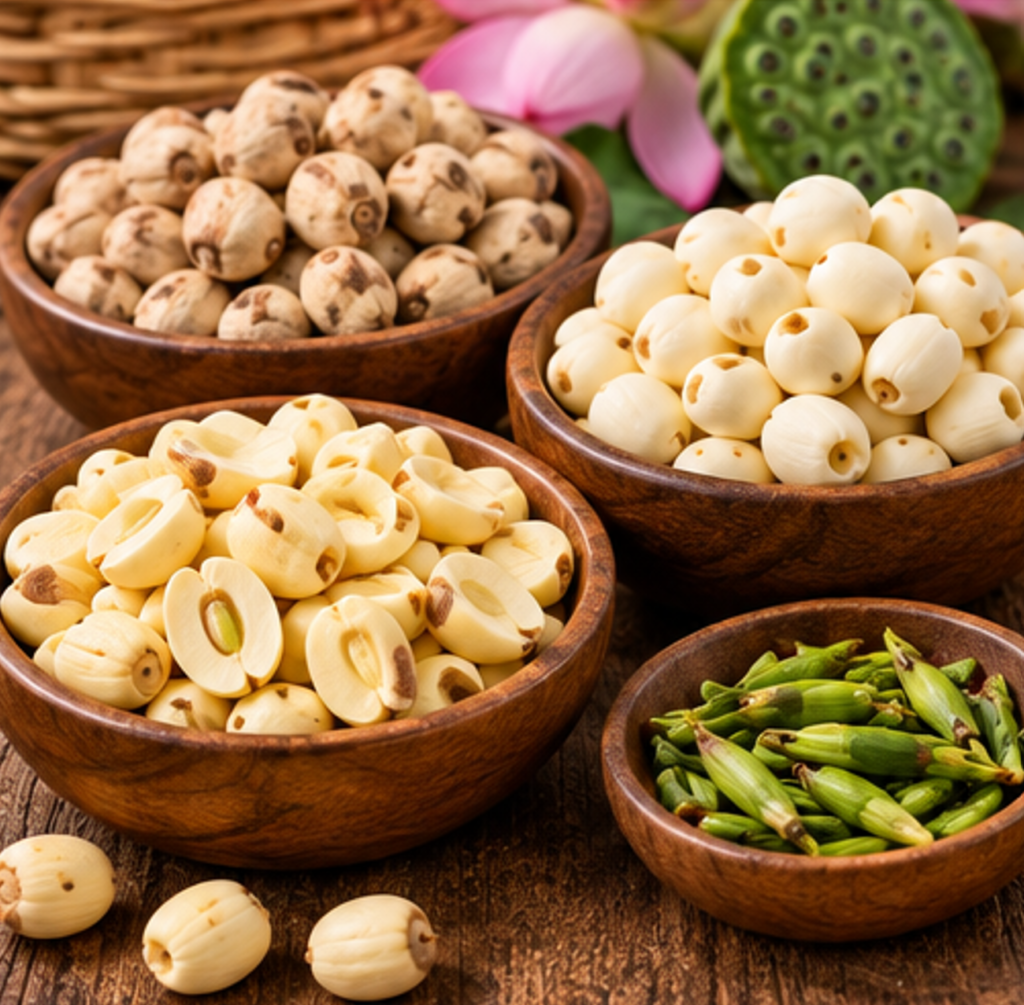
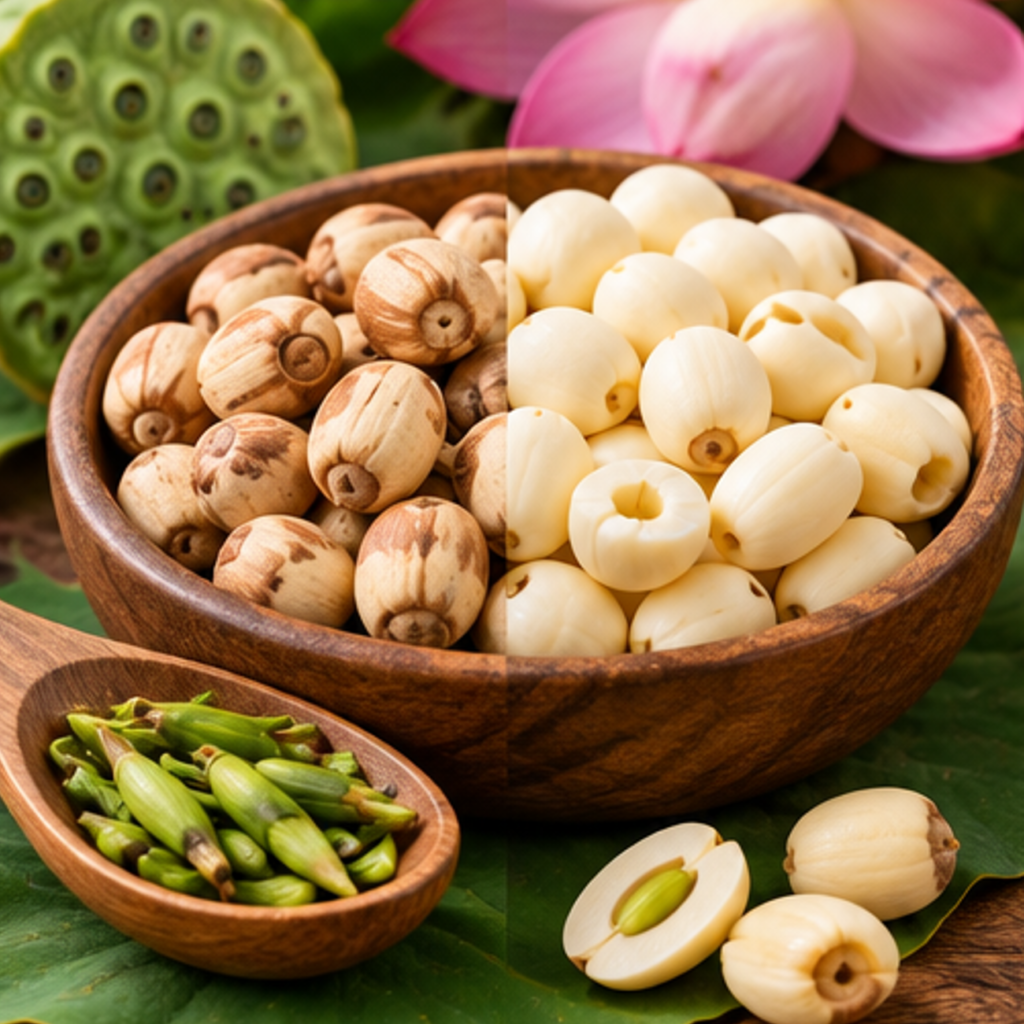
4.1. Whole Dried Lotus Seeds
Whole dried lotus seeds are a common commercial form.
They may be supplied with different levels of processing depending on buyer requirements.
Common applications:
- Food manufacturing
- Traditional desserts
- Wholesale distribution
- Specialty food retail
- Further processing
Important purchasing criteria include seed size, moisture content, cleanliness, color, and broken percentage.
4.2. Peeled Lotus Seeds
Peeled lotus seeds have had the outer seed coat removed.
This form may be preferred for applications where appearance, texture, or processing convenience is important.
Buyers should confirm the degree of peeling, surface appearance, and acceptable percentage of damaged seeds.
4.3. Lotus Seeds with Core Removed
The lotus seed embryo, sometimes called the lotus heart or core, has a noticeably bitter taste.
For certain dessert and confectionery applications, buyers may prefer seeds with the core removed.
When ordering this product, buyers should specify the acceptable level of residual cores.
4.4. Split Lotus Seeds
Split lotus seeds may be suitable for applications where whole-seed appearance is not essential.
They can be considered for food processing, cooking preparations, or further manufacturing.
Buyers should define the acceptable size distribution and broken percentage.
4.5. Lotus Seed Powder
Lotus seed powder may be used in selected food formulations, depending on processing and supplier capabilities.
For powdered products, buyers should pay attention to particle size, moisture content, microbiological quality, ingredient composition, and packaging.
Availability of lotus seed powder should be confirmed before placing an order.
4.6. Fresh vs. Dried Lotus Seeds
Fresh lotus seeds and dried lotus seeds have different handling, storage, and transportation requirements.
Fresh lotus seeds generally require more careful temperature and shelf-life management.
Dried lotus seeds may be more convenient for certain international supply chains when appropriately processed, packed, and stored.
Importers should confirm which form is suitable for their intended market.
5. Vietnamese Lotus Seeds Specifications for Importers
A detailed product specification sheet helps buyers compare supplier quotations and establish consistent quality requirements.
The following table outlines important specification categories.
Note: These are recommended purchasing criteria, not guaranteed VinaSpices product specifications. Actual values must be confirmed for each quotation and shipment.
| Specification | What Buyers Should Confirm |
|---|---|
| Product name | Dried Lotus Seeds |
| Botanical name | Nelumbo nucifera Gaertn. |
| Country of origin | Vietnam |
| Product form | Whole, peeled, split, or powder |
| Core removal | With core or core removed |
| Seed size | Agreed size range |
| Moisture content | Agreed maximum percentage |
| Color | Natural color appropriate to grade |
| Broken percentage | Agreed maximum percentage |
| Foreign matter | Agreed maximum percentage |
| Damaged or discolored seeds | Agreed maximum percentage |
| Aroma | Characteristic odor without undesirable off-notes |
| Microbiological criteria | Buyer and destination-market requirements |
| Pesticide residues | Applicable destination-market limits |
| Heavy metals | Applicable legal and contractual limits |
| Packaging | Food-grade bags, cartons, or agreed materials |
| Traceability | Batch and origin information as agreed |
Buyers should agree on sampling methods, testing procedures, and acceptance criteria before confirming a purchase order.

6. Lotus Seed Size, Color, and Appearance
Physical appearance is an important purchasing consideration, particularly for whole and peeled lotus seeds.
Seed Size
Different buyers may require different seed sizes depending on the intended application.
Uniform sizing may be particularly important for:
- Retail packaging
- Dessert manufacturing
- Confectionery production
- Automated food processing
Buyers should specify the acceptable size range rather than relying only on descriptions such as large or small.
Color
Lotus seed color can vary depending on variety, processing, peeling, and storage.
For peeled dried lotus seeds, buyers may prefer a reasonably consistent natural appearance.
However, appearance alone does not establish food safety or product authenticity.
Broken and Damaged Seeds
A higher proportion of broken seeds may affect visual presentation and processing performance.
For applications where whole-seed appearance is important, buyers should define a maximum broken percentage.
For industrial processing, a different acceptable limit may be appropriate.
7. Moisture Content and Drying Methods
Moisture control is essential for dried lotus seeds intended for storage and international transportation.
Excessive moisture may increase the risk of product deterioration during storage.
The appropriate moisture limit depends on the product form, intended application, and buyer requirements.
Drying Considerations
Lotus seeds may be dried using different methods, depending on the processing facility and product requirements.
Important considerations include:
- Raw material cleanliness
- Drying temperature
- Drying duration
- Moisture uniformity
- Protection from contamination
- Cooling before packaging
- Storage humidity
Controlled drying and appropriate packaging can support more consistent product quality.
However, the final product should still be verified against agreed specifications.
8. Quality Control for Export-Grade Lotus Seeds
International buyers should evaluate both physical quality and food safety.
Recommended Quality Inspection Checklist
Before approving a bulk order, buyers should consider:
- Botanical identity verification
- Seed size and appearance
- Moisture testing
- Broken percentage
- Foreign matter inspection
- Discoloration and damage
- Mold and pest inspection
- Microbiological testing where required
- Pesticide residue testing where applicable
- Heavy metal testing where applicable
- Packaging integrity
- Batch traceability
Microbiological Quality
Lotus seeds intended for food manufacturing may require microbiological testing according to buyer specifications and destination-market regulations.
Requirements vary depending on product form, processing method, and intended use.
Chemical Contaminants
Buyers should verify applicable pesticide residue and contaminant requirements.
The relevant testing scope should be determined according to the destination market and the product’s intended application.
Supplier Documentation
Depending on the order, buyers may request:
- Product specification sheet
- Certificate of Analysis, where available
- Batch identification
- Inspection reports
- Origin documentation
- Relevant export documents
Supplier claims should be supported by appropriate records where verification is required.
9. Vietnamese Lotus Seeds vs. Other Commercial Seed Ingredients
Lotus seeds are sometimes grouped commercially with nuts, beans, or other seed ingredients.
However, they are botanically and functionally distinct.
| Feature | Lotus Seeds | Common Legumes or Nuts |
|---|---|---|
| Botanical source | Nelumbo nucifera | Varies by ingredient |
| Flavor | Generally mild | Varies widely |
| Texture after cooking | Depends on processing and preparation | Depends on ingredient |
| Common applications | Desserts, fillings, sweet soups | Snacks, bakery, savory foods |
| Processing requirements | May involve peeling and core removal | Vary by product |
| Substitution | Requires formulation testing | Not directly interchangeable |
Food manufacturers should evaluate ingredient functionality, texture, flavor, labeling, and allergen-management requirements before making substitutions.
10. Packaging Options for Vietnamese Lotus Seeds Export
Proper packaging helps protect dried lotus seeds against moisture, contamination, and physical damage.
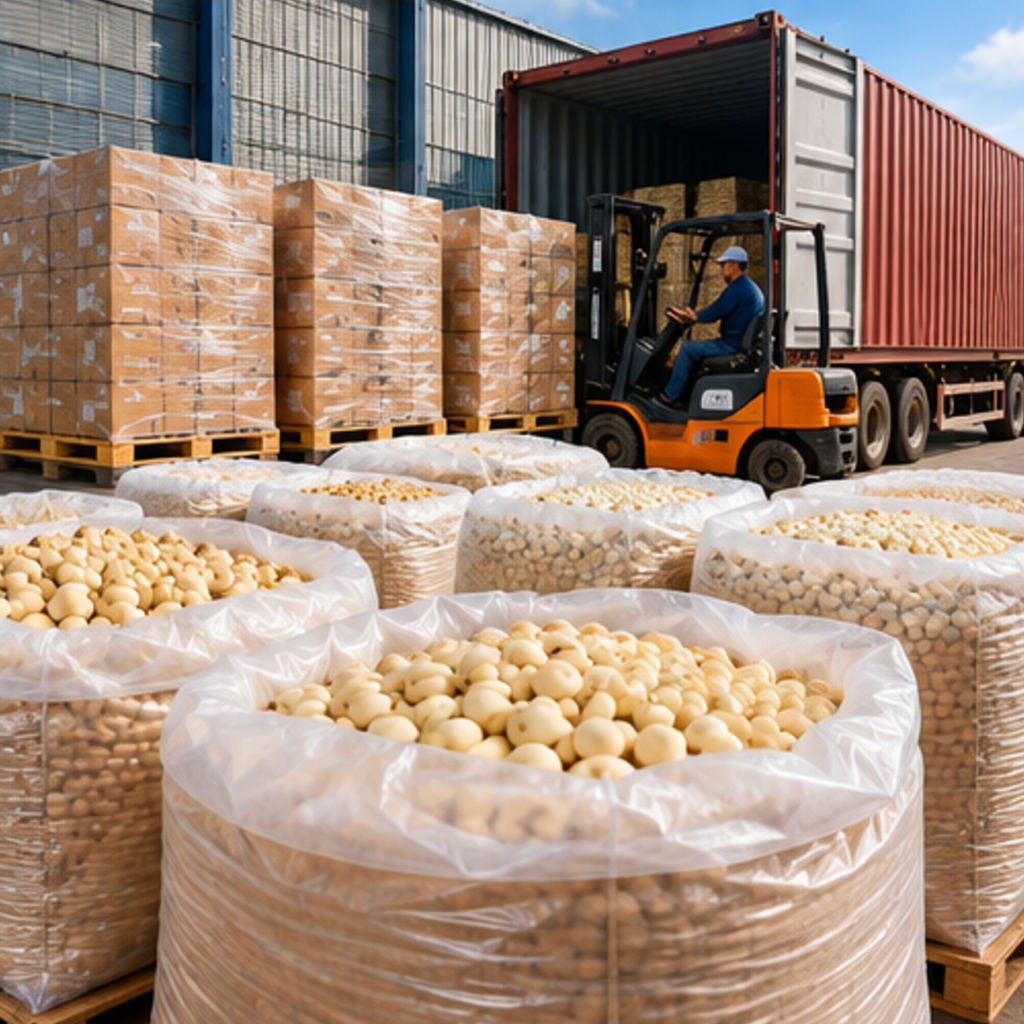
Food-Grade Bulk Bags
Suitable food-grade bags or lined bulk packaging may be used for industrial shipments.
Carton Packaging
Cartons may be appropriate for selected grades or buyers requiring additional protection during transportation.
Vacuum or Protective Packaging
Depending on supplier capabilities and product requirements, certain packaging systems may be considered to support product protection.
However, packaging suitability and shelf life should be validated for the specific product.
Customized Packaging
Buyers may request particular net weights, labeling, or retail packaging arrangements where supported.
Important Packaging Requirements
- Moisture protection
- Food-contact material suitability
- Accurate net weight
- Product identification
- Batch traceability
- Suitable stacking and handling
- Destination-market labeling compliance
Packaging specifications should be agreed upon before production or shipment.
11. How to Import Lotus Seeds from Vietnam
A structured sourcing process helps international buyers reduce commercial and quality risks.
Step 1: Identify the Required Product Form
Determine whether you need whole dried lotus seeds, peeled seeds, core-removed seeds, split seeds, or another processed form.
Step 2: Define Your Specifications
Specify seed size, moisture limits, appearance, broken percentage, core removal, packaging, and relevant testing criteria.
Step 3: Request a Quotation
Contact a Vietnamese lotus seeds supplier with your required quantity, destination port, and preferred Incoterms.
Step 4: Request Representative Samples
Evaluate appearance, cleanliness, size uniformity, and suitability for your intended food application.
Step 5: Confirm Quality Requirements
Agree on testing methods, inspection arrangements, acceptance criteria, and documentation.
Step 6: Confirm Commercial Terms
Discuss pricing, payment conditions, shipment timing, and responsibilities under the selected Incoterms.
Step 7: Verify Import Regulations
Check customs classification, phytosanitary requirements, food safety standards, labeling rules, and other applicable destination-market regulations.
Step 8: Approve Shipment
Ensure that the shipment matches the agreed product specifications and commercial documentation.
12. What Affects Vietnamese Lotus Seeds Prices?
The price of Vietnamese lotus seeds wholesale may vary according to several factors.
Product Form
Whole, peeled, split, and core-removed seeds may involve different processing costs.
Seed Size and Uniformity
Sorting requirements and size consistency can influence pricing.
Processing Requirements
Peeling, core removal, drying, cleaning, and grading may affect production expenses.
Moisture and Quality Requirements
Additional drying, laboratory testing, or inspection can influence the final quotation.
Seasonal Availability
Harvest timing, growing conditions, and inventory levels may affect supply.
Order Quantity
Bulk order volumes may influence unit pricing depending on supplier capacity and availability.
Packaging and Shipping
Packaging materials, freight charges, destination port, and Incoterms affect the total landed cost.
For accurate pricing, buyers should provide complete technical and commercial requirements.
13. Why Source Vietnamese Lotus Seeds with VinaSpices?
VinaSpices JSC works with international buyers interested in sourcing Vietnamese spices and agricultural products.
Lotus seeds are one of our agricultural product interests, alongside Vietnamese cassia cinnamon, star anise, black cardamom, ginger, and other ingredients.
We welcome inquiries from:
- Food ingredient importers
- Agricultural product wholesalers
- Bakery and confectionery manufacturers
- Dessert and snack producers
- Beverage ingredient buyers
- Asian food distributors
- Foodservice suppliers
- International agricultural commodity traders
Our approach is to understand each buyer’s requirements and discuss suitable sourcing arrangements.
Product availability, processing forms, grades, packaging options, laboratory testing, export documentation, and shipment terms are confirmed during the quotation process.
14. Frequently Asked Questions About Vietnamese Lotus Seeds
What is the botanical name of lotus seeds?
The botanical name is Nelumbo nucifera Gaertn.
Where are lotus seeds grown in Vietnam?
Lotus is cultivated in different regions of Vietnam. Dong Thap in the Mekong Delta is particularly well known for its lotus-growing tradition.
What is the difference between peeled and unpeeled lotus seeds?
Peeled lotus seeds have had the outer seed coat removed. The appropriate form depends on the buyer’s intended food application.
Why is the lotus seed core removed?
The green embryo inside the seed has a bitter taste. Some food applications prefer seeds with the core removed to achieve the desired flavor.
Can Vietnamese lotus seeds be used in bakery products?
Yes. Appropriately processed lotus seeds are used in bakery fillings, confectionery, and dessert preparations.
What is the moisture content of export-grade dried lotus seeds?
Moisture specifications vary according to product form, processing method, buyer requirements, and destination market. Importers should agree on a maximum value and suitable testing method.
Can I buy Vietnamese lotus seeds in bulk?
Bulk purchasing arrangements may be available through qualified suppliers, depending on product grade, quantity, packaging, and supply conditions.
What is the minimum order quantity for lotus seeds?
Minimum order quantities vary by supplier, product form, packaging, and availability. Buyers should confirm the MOQ when requesting a quotation.
Can I request samples before placing an order?
Buyers may request sample availability and sampling terms during the quotation process.
What documents are required for lotus seed export?
Requirements vary by destination market. Commercial invoices, packing lists, certificates of origin, phytosanitary certificates, and analytical reports may be applicable.
Request a Vietnamese Lotus Seeds Quotation
Are you looking for a Vietnamese Lotus Seeds Supplier for wholesale distribution, food manufacturing, or ingredient processing?
Contact VinaSpices JSC to discuss your requirements for Vietnamese dried lotus seeds, including whole, peeled, core-removed, and other available forms.
For a faster quotation, please provide:
- Required product form
- Order quantity
- Seed size requirements
- Moisture specifications
- Core removal requirements
- Broken percentage limits
- Packaging preferences
- Destination port
- Preferred Incoterms (FOB, CIF, or other agreed terms)
- Required laboratory testing and export documentation
VinaSpices JSC – Vietnam Spices & Agricultural Products
Email: spicesvina@gmail.com
WhatsApp: +84 904 384 051
Website: https://vietnam-spices.com/
Contact: https://vietnam-spices.com/contact/
Send us your RFQ and explore sourcing opportunities for Vietnamese lotus seeds and other agricultural ingredients.